About the 121st Evacuation Hospital
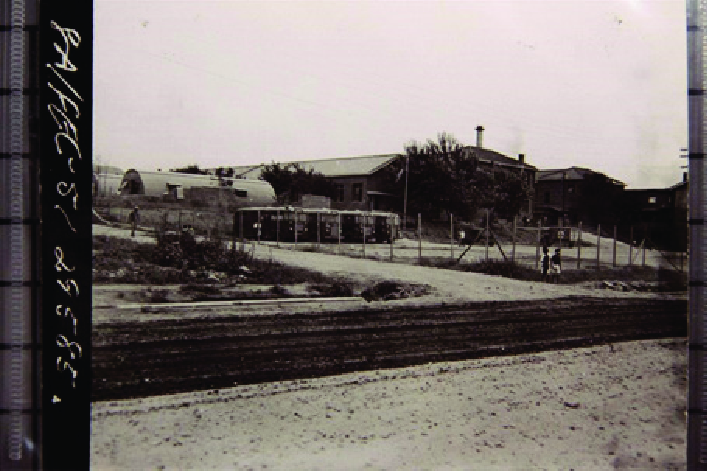
During the Korean War, the 121st Evacuation Hospital served as one of the primary medical installations for U.N. and U.S. forces. It was a semi-permanent yet mobile unit designed to receive casualties directly from forward aid stations and MASH units. Photographs and first-hand accounts, while scarce, suggest the 121st was a substantial rear-area medical facility consisting of permanent and semi-permanent structures, rather than the tented MASH units commonly portrayed in popular culture.
The hospital’s staff included surgeons, psychiatrists, Army Nurse Corps officers, technicians, administrators, and support personnel. It provided surgery, psychiatric triage, and stabilized patients for long-term evacuation to Japan.
While the 121st Evacuation Hospital spent decades in Korea, its location during the war fluctuated dramatically based on the movement of the front lines. In the earlier days of the war it was forced to move under extreme and hostile conditions as North Korean and Chinese forces captured Seoul twice. Later in the war as the front line became entrenched along the 38th parallel, reminiscent of WWI trench warfare, the 121st occupied a bombed out school campus. It operated its massive Quonset-hut and brick school complex at Yeongdeungpo (Yongdongpo) in Seoul, sending its stabilized patients out via the nearby K-16 Airfield.
After the armistice was signed, the hospital moved to ASCOM (Army Service Command City), located in Bupyeong, near Incheon, southwest of Seoul, adjacent to Kimpo Airbase (K-14).
Author’s Note
The 121st Evacuation Hospital was a real U.S. Army medical facility during the Korean War. While many of the characters and events in The Alone Man are fictional, the hospital itself and its role in treating combat casualties and psychiatric patients are based on historical sources. I did my best to recreate the feel of the 121st, researching details about the structure, personnel, building style, materials, vehicles etc.