Is 1952 Modern Medicine?
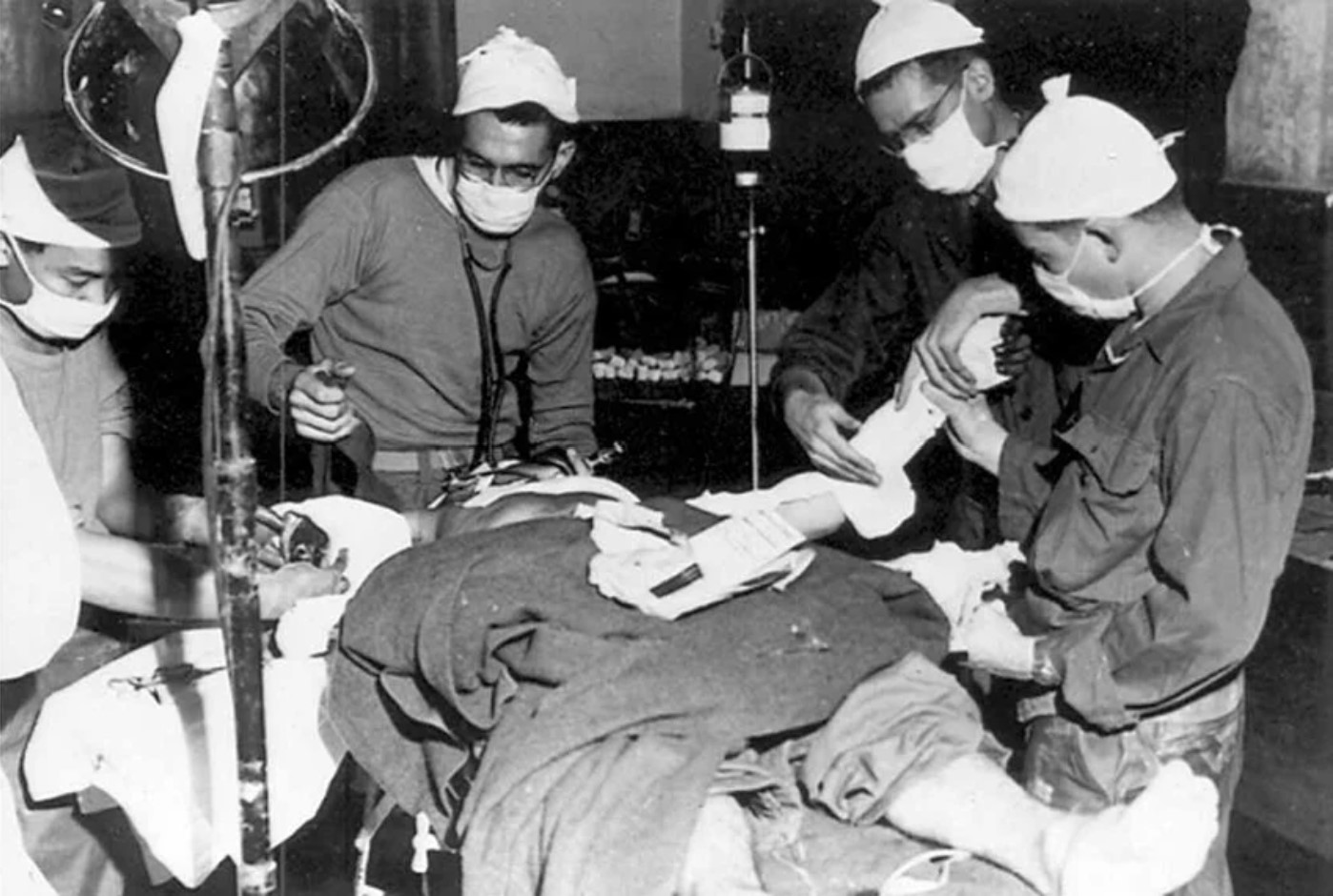
To surgeons in late 1952, they weren’t practicing “old” medicine; they were standing on the cutting edge of a medical revolution that had just saved Western civilization a few years prior in WWII.
By framing 1952 as the dawn of the modern medical era, we highlight a profound historical truth: doctors in 1952 had the logic of modern medicine, even if they lacked the tools.
Modern Medicine in 1952
There are many aspects of 1952 medicine that would be familiar to a modern-day practitioner. Scrubbing for surgeries. Masks and gloves. X-rays and autoclaves. Charts and case notes. Understanding of the pathology of disease. Blood types and cross-matching.
1. The Antibiotic Miracle is now Standard
For the first time in human warfare, a soldier was more likely to survive a wound infection than die from it.
By 1952, Penicillin was mass-produced and ubiquitous. Streptomycin was treating tuberculosis, and broad-spectrum antibiotics like Aureomycin (chlortetracycline) and Chloromycetin (chloramphenicol) were actively deployed.
Doctors fully understood microbial resistance and the necessity of sterile fields. The days of “laudable pus” and hoping for the best were gone; Doctors in 1952 expected to prevent or cure infections.
2. The Vascular Surgery Revolution (The Korean War Breakthrough)
Before the Korean War, if a soldier suffered a severed major artery in a limb, the standard procedure was ligation (tying it off), which resulted in an amputation rate of about 49%.
In 1952, surgeons at the 121st Evac and various MASH units began practicing definitive vascular repair using fine silk sutures to stitch arteries back together. The amputation rate plummeted to around 13%. This was the birth of modern trauma surgery.
3. “The Golden Hour” and Shock Management
The 121st Evac benefited from the birth of modern military triage and rapid evacuation. The introduction of helicopters (Bell H-13) meant that a wounded soldier could go from the front line to a surgical table in under an hour.
By 1952, Doctors understood hemorrhagic shock perfectly. They used whole blood banks, typed and cross-matched, alongside dried plasma to keep blood pressure up. Long gone were the dark ages of bloodletting, which had mercifully disappeared around the end of the 19th century.
4. Advanced Anesthesia
Anesthesia was no longer a bottle of ether and a rag. Sodium pentothal was used for smooth induction, endotracheal intubation to control airways, and curare derivatives for muscle relaxation. Doctors could keep a shattered chest open and a patient breathing for hours.
What Medicine Lacked in 1952
The physician’s toolbox in 1952, while built on modern medical theories, was woefully sparse on tools. They lacked many modern medications, including better antibiotics, vaccines, and anaesthetics. Psychiatric medicine, post-op treatment and physical therapy were all missing from the medical practice.
1. Advanced imaging
1952 had X-rays, but they were flat, 2D static films that took time to develop in a darkroom. If a piece of shrapnel was lodged near the aorta, the surgeon had to guess its depth or use a fluoroscope (which blasted everyone with massive doses of radiation).
Magnetic Resonance Imaging (MRI), Computed Tomography (CT) scans, and ultrasound would fundamentally transform imaging in the coming decades.
2. Microsurgery
Every surgery was “open”. If a knee joint was filled with bone fragments, the surgeon made a massive incision, peeling back tissue to visualize it.
There were no minimally-invasive techniques such as arthroscopy (joint) or laparoscopy (abdomen). The sheer physical trauma of the surgery itself was a major factor in patient recovery time and infection risk.
3. Monitoring
In 1952, monitoring a patient under anaesthesia or in the ICU required a dedicated human being holding a wrist to check the pulse, watching the chest rise and fall, and manually inflating a blood pressure cuff every five minutes. The primary indicator that a patient was running out of oxygen was cyanosis—literally watching if their lips turn blue.
There were no pulse oximeters, no continuous ECG monitors with alarm thresholds, and no automated ventilators. If a patient stopped breathing in the middle of the night, a nurse had to notice it with their own eyes.
4. The Hidden Killers (Viruses and Contaminated Plasma)
While by 1952 medicine had conquered many bacteria, virology was in its infancy. They used pooled blood plasma heavily, which unknowingly spread homologous serum hepatitis (Hepatitis B and C) to thousands of soldiers. They had no idea how to screen for these viruses, nor did they have the antivirals to treat them. Furthermore, the polio vaccine was still a few years away from public rollout; viral diseases were a black box.
*Photograph: An amputation operation is performed by a doctor and staff of the 8063rd MASH, November 4, 1950. U.S. Army photograph 8A/FEC-50-21376 by McIntosh reprinted with permission. *