Psychiatry at the 121st
One of the most well-documented operational aspects of the 121st was its role as a centralized hub for military psychiatry. During the war, the U.S. military realized that traditional psychiatric evacuation back to the United States resulted in permanent psychological casualties. Instead, psychiatrists stationed at the 121st pioneered a paradigm shift, locally treating what was then termed “gross stress reaction” or “combat fatigue” (the historical predecessors of PTSD). Doctors and nurses documented treating men presenting with:
- Severely impaired concentration
- Acute memory loss
- Depression
- Intense social alienation
A lesson learned from World War II was that soldiers suffering from combat exhaustion, after returning stateside, rarely ever returned to military service. This lead to what became known as the PIE principle: Proximity, Immediacy, and Expectancy. Soldiers were treated close to the front lines, as soon as symptoms appeared, and with the expectation that they would recover and return to duty. This approach proved far more successful than evacuating psychological casualties to hospitals in the United States.
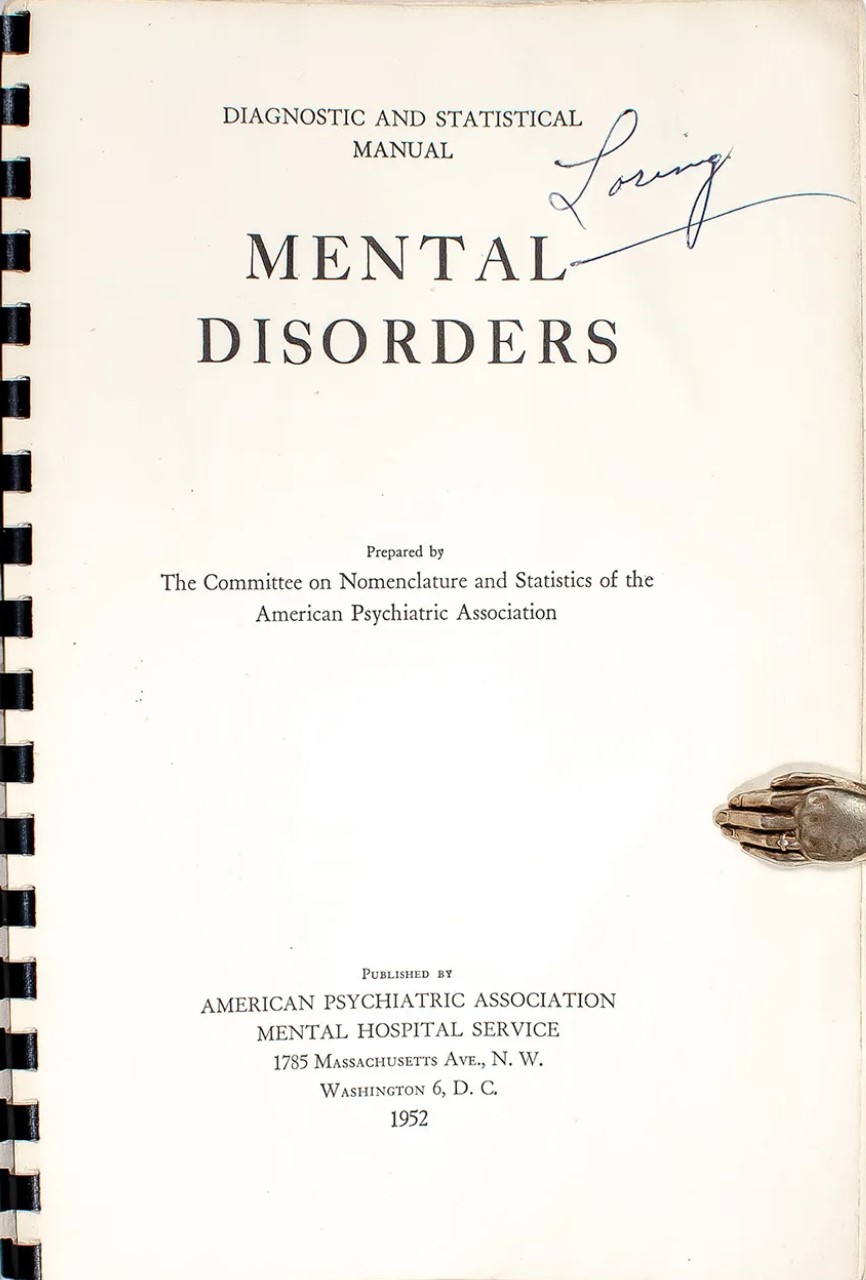
Photograph: inner cover of the DSM-1, published in May, 1952